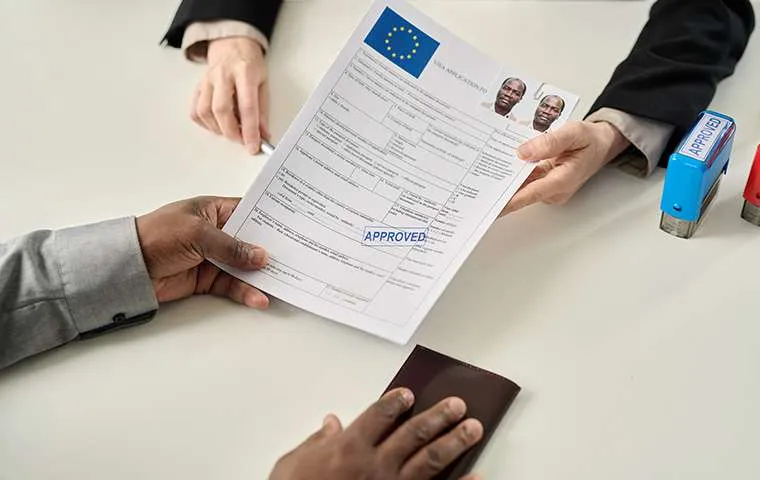
When you need to use a document outside the UAE — for a visa application, immigration procedure, foreign university admission, offshore bank account, embassy submission, or international commercial transaction — a simple photocopy is almost never enough. The receiving authority wants assurance that the copy you have submitted is an accurate, complete, and trustworthy reproduction of the original, produced by someone with the legal standing to confirm it.
That assurance is provided through a certified true copy: a copy that has been examined against the original document and formally endorsed by an appropriately authorised person. But certified true copy certification in Dubai is not a one-size-fits-all process. The correct certifier, the correct format, and the correct subsequent steps — including whether Ministry of Foreign Affairs (MOFA) attestation or embassy legalization is also required — depend on the type of document, the destination country, and the specific requirements of the receiving authority.
At Omam Legal Consultancy, we assist individuals and businesses in Dubai with the proper certification of true copies and guide them through the next legal and procedural steps required for valid overseas use. This guide explains what a certified true copy is, who can certify in Dubai, when MOFA attestation and embassy legalization are required, and what the most common mistakes are that lead to rejection and delay.
What Is a Certified True Copy? Definition and Legal Character
A certified true copy is a copy of an original document that has been reviewed against the original and certified by an appropriately authorised person as a true and complete reproduction of that original. In legal terms, the certification confirms one specific thing: that the copy matches the original document that was examined at the time of certification. It does not confirm the continuing validity of the underlying document, the legal effectiveness of the transaction it relates to, or the authority of the person who signed the original.
In practical terms, the certifier examines the original document, compares it with the copy, and then signs, stamps, and dates the copy with wording confirming that it is a certified true copy of the original presented. The certifier’s identity, credentials, and legal standing to certify are what give the document its value to the receiving authority — not simply the presence of a stamp.
A certified true copy is legally and practically different from:
- A standard photocopy: a photocopy carries no certification and no independent legal value — anyone can make a photocopy, and the receiving authority has no basis for relying on its accuracy.
- A scan sent by email or WhatsApp: an informal digital copy without formal certification is not acceptable for official purposes regardless of how clearly the original can be seen.
- An internal company stamp stating ‘true copy’: a company or HR department endorsement does not carry the legal standing of an authorised certifier and will not satisfy embassies, immigration authorities, or regulated institutions.
- An unofficial typing centre endorsement: typing centres have no authority to certify documents for official overseas use and their stamps are not recognised by foreign authorities or international institutions.
- A notarization carried out for a different legal purpose: a notarization performed for a domestic UAE purpose — such as signing authority or contract attestation — does not automatically substitute for a true copy certification intended for a specific overseas use.
This distinction matters because foreign embassies, immigration authorities, universities, banks, regulators, and international counterparties require a document certified through the correct and recognised route — and they have the right to reject anything that falls short of that standard
Why Certified True Copies Are Commonly Required for Overseas Use
Certified true copies are requested by foreign authorities and institutions because the original document cannot or should not be surrendered, but the receiving authority still requires assurance that the copy is genuine, complete, and accurately represents the original. For overseas use specifically, the certification provides an additional layer of assurance that a locally competent professional has examined the original — reducing the risk of altered, incomplete, or unofficial documents being submitted for high-stakes international purposes.
Common Documents Required as Certified True Copies for Overseas Use
- Passport copies for immigration and visa applications: embassies and immigration authorities require copies that have been certified by a recognised professional, not just photocopied.
- Emirates ID copies for official overseas use: proof of UAE residency status for overseas institutions commonly requires a certified copy of the Emirates ID rather than an uncertified photocopy.
- Degree certificates and academic transcripts for university admissions or professional recognition: foreign universities and professional licensing bodies typically require certified copies of educational credentials to protect against fraudulent submissions.
- Bank statements and proof of address for compliance or onboarding: offshore banks, foreign financial institutions, and compliance-focused counterparties require certified copies as part of their KYC and due diligence procedures.
- Tenancy agreements and utility bills as proof of residence: some visa categories and immigration applications require certified copies of residence evidence.
- Trade licences and corporate documents for foreign transactions: overseas registration, foreign investment applications, and cross-border commercial dealings commonly require certified copies of UAE company documents.
- Birth certificates, marriage certificates, and civil status documents: immigration applications, spouse visas, and family reunification procedures commonly require certified copies of civil status documents.
For both individuals and companies, proper certification reduces the risk that a receiving authority will reject the submission due to disputed authenticity, missing pages, or unrecognised certification sources.
Why Informal Certification Creates Risk for Overseas Submissions
One of the most consistent patterns in overseas document rejection is the assumption that any document bearing a stamp is legally sufficient. For domestic UAE purposes, this sometimes works in practice — because local institutions may exercise discretion about what they accept. For overseas use, the same assumption almost always fails — because embassies, immigration authorities, and foreign institutions apply precise standards and have no obligation to accept documents that do not meet them.
The Most Common Problematic Assumptions
A typing centre stamp is enough. Typing centres have no recognised authority for overseas document certification. Their endorsements do not satisfy embassy or immigration standards in any jurisdiction that requires proper certification.
A scanned copy can be certified remotely without the original being physically checked. Where an original has not been directly examined, there is no authoritative confirmation that the copy is accurate. Most overseas authorities require evidence that the certifier saw the original.
A company HR or administration stamp will be accepted internationally. An employer’s internal certification stamp carries no standing before an embassy or foreign regulatory authority. Only an independently authorised certifier with recognised professional standing meets the standard.
A document certified informally by an unrecognised source will satisfy an embassy or immigration authority. Immigration authorities in particular have well-defined lists of acceptable certifiers. Anything outside those lists will typically be rejected regardless of how official the document looks.
In practice, these assumptions lead to rejection, delays, missed visa appointment windows, duplicate application costs, and in some cases, negative consequences for ongoing immigration matters.
Who Can Certify True Copies in Dubai for Overseas Use?
The correct certifier for overseas use depends on the type of document, the purpose of use, the destination country, and the specific requirements of the receiving authority. There is no single answer that applies in every case — which is why confirming with the receiving authority before beginning the certification process is the most important practical step.
Licensed Lawyers and Legal Consultants
For many categories of personal and commercial documents intended for overseas use, certification through a licensed legal professional in Dubai is commonly used as an initial step — particularly where the receiving authority specifies that it accepts copies certified by a solicitor, advocate, or legal consultant. This route is widely used for passports, Emirates IDs, bank statements, degree certificates, tenancy agreements, and commercial records destined for overseas banks, universities, and certain immigration pathways. The lawyer’s name, licence details, firm letterhead, signature, and date should all appear on the certified copy.
Notary Public
A notarial route is required where the receiving authority specifically requests notarization, or where the nature of the document or its intended use falls within notarial practice. For high-stakes official uses — such as overseas company registration, court proceedings abroad, or filings with foreign regulatory authorities — notarial certification through a licensed public or private notary in Dubai provides the strongest foundation for subsequent attestation. However, notarial certification should not be assumed to be interchangeable with lawyer certification: some overseas authorities require the notarial route specifically, while others accept either.
DIFC Courts Notary Service
The DIFC Courts Notary Service — established by Resolution No. 1 of 2025 and affirmed by Dubai Law No. 2 of 2025 — provides a dedicated notarial route for DIFC-based entities and for documents intended for use within the DIFC legal ecosystem. It expressly covers the certification of true copies and uses blockchain-verified transaction records through Hedera’s Distributed Ledger Technology. For DIFC-connected transactions and international counterparties familiar with the DIFC framework, this channel provides both legal authority and technological verifiability.
Embassies and Consulates
Some embassies and consulates certify or legalize copies of documents connected to their own nationals or jurisdiction. Their procedures vary significantly and may involve prior appointments, document type restrictions, mandatory pre-authentication steps, and jurisdiction-specific requirements. Embassy certification should be confirmed directly with the relevant embassy rather than assumed from general information. Some embassies only accept documents that have been pre-certified by a local professional before embassy processing.
Institution-Specific Certifying Bodies
In limited contexts — for example, where a UAE university certifies a graduate’s academic transcript for a specific institutional purpose — the issuing authority may certify its own documents. However, that does not mean the certification will satisfy an embassy, immigration authority, foreign regulator, or overseas bank. For overseas use, institution-specific certifications typically need to be followed by additional authentication steps.
The Most Important Rule: The Original Must Be Examined
True copy certification should always be based on direct inspection of the original document by the certifier. This requirement is both a legal safeguard and a practical one: it is the certifier’s examination of the original that gives their endorsement its evidential value. Without that examination, the certification is simply an assertion that cannot be verified — and many overseas authorities will reject it on that basis.
Before presenting documents for certification, ensure that:
- the original document is physically available for inspection by the certifier;
- the document is current and valid where validity matters — an expired passport or lapsed trade licence should be renewed before certification for overseas use;
- the copy is clear, complete, and unaltered — blurred, cropped, or digitally adjusted copies may be rejected even where the certification itself is otherwise properly executed;
- all required pages are included — for passports, this means all data pages, visa pages, entry and exit stamps, and any pages specifically relevant to the receiving authority’s requirements; and
- the certifier provides appropriate professional details on the certification endorsement, including name, professional designation, licence or bar number, firm name, stamp, signature, and date.
A defective original — even with a correctly performed certification — may still result in rejection at the overseas destination. The certification confirms that the copy matches what the certifier saw; it does not remedy deficiencies in the original document itself.
When MOFA Attestation or Embassy Legalization Is Required for Overseas Use
For many overseas purposes, lawyer or notary certification in Dubai is only the first step in the authentication chain. The receiving authority in the destination country may require further proof that the UAE certification itself is genuine — which is provided through the attestation and legalization chain.
What MOFA Attestation Does
UAE Ministry of Foreign Affairs (MOFA) attestation authenticates the signature and seal of the certifier on the document — confirming to foreign authorities that the person who certified the copy was a recognised legal professional or notary in the UAE. MOFA does not re-certify the content of the document; it attests the authority of the certifier. This step is required where the destination country’s institutions or authorities need confirmation that the UAE-side certification was performed by a legitimate and authorised person.
What Embassy Legalization Does
Embassy or consulate legalization is the final step in the chain. The destination country’s embassy or consulate in the UAE confirms that the MOFA attestation is genuine, authenticating the chain of verification for the destination country’s own authorities. This step is required by countries that do not automatically recognize UAE official certifications without their own consular confirmation.
Which Countries and Situations Require the Full Chain
Requirements vary significantly by destination country and by the specific receiving institution. Some countries require the full chain: UAE certification, MOFA attestation, and embassy legalization. Others that are signatories to the Hague Apostille Convention accept an apostille stamp from UAE authorities in place of the embassy legalization step. Some international institutions — including certain offshore banks, overseas universities, and professional licensing bodies — specify exactly which steps they require, and this should be confirmed directly with the institution before beginning the process.
Because requirements differ significantly from one country and institution to another, verification with the receiving authority before submission is not optional — it is essential. Submitting a document that is correctly certified but missing a required attestation step will almost always result in rejection.
Common Mistakes That Lead to Rejection of Certified True Copies
Using an Ordinary Photocopy Without Certification
Submitting an uncertified photocopy for a purpose that specifically requires a certified true copy is the most basic and most avoidable error. Where the receiving authority has specified certification, no uncertified copy will be accepted regardless of how clearly the original can be read from the photocopy.
Relying on an Unofficial or Unrecognised Stamp
Typing centre stamps, employer HR stamps, and internal company certification endorsements are not recognised by embassies, immigration authorities, or foreign institutions for official overseas purposes. Documents bearing only these endorsements will be rejected by any authority applying a recognised certification standard.
Submitting an Expired Passport, ID, or Trade Licence
Where the underlying document has expired, any certification based on that document is only as current as the document itself. Embassies and immigration authorities verify document validity dates, and a certified copy of an expired passport will not advance a visa or immigration application.
Providing Poor-Quality, Cropped, or Incomplete Copies
A blurred, low-resolution, or cropped copy — even if properly certified — may be rejected for failing to clearly reproduce all relevant information from the original. Copies should be produced at full document size, at high resolution, and without any cropping or adjustment.
Failing to Include All Required Pages
Certifying only the biographical data page of a passport when the receiving authority also needs visa pages, entry stamps, or specific endorsement pages creates an incomplete submission. Before certification, confirm exactly which pages are required for the specific purpose.
Using the Wrong Type of Certifier
Some authorities accept only notarized copies; others accept lawyer-certified copies; others require embassy or consular certification. Using the wrong certifier for the specific receiving authority is one of the most common causes of rejection — and it requires the entire process to be repeated with the correct certifier before the submission can proceed.
Assuming MOFA Attestation or Embassy Legalization Is Unnecessary
For overseas use, failing to include required MOFA attestation or embassy legalization steps is a very common cause of rejection. The receiving authority abroad requires the full authentication chain they have specified — and a UAE-certified copy without MOFA or embassy endorsement will not satisfy a foreign immigration authority or bank that requires the complete chain.
Failing to Confirm Destination-Specific Requirements in Advance
Different countries and institutions apply different standards. Assuming that a process that worked for one destination or institution will automatically work for another is consistently wrong. Confirming requirements with the specific receiving authority before beginning the process is the single most effective way to avoid rejection.
How to Get a Certified True Copy in Dubai: A Step-by-Step Guide
Step 1: Confirm the Exact Requirement
Contact the receiving authority directly and confirm in writing what they require. Ask specifically whether they need a certified true copy only, notarization, MOFA attestation, embassy legalization, or a specific wording, format, or sequence. For immigration applications, check the official government or embassy website for the specific requirements applicable to your visa category or application type. For overseas banks and universities, their compliance or admissions offices should be able to provide specific certification instructions.
Step 2: Gather the Original Documents
Ensure the original document is physically available and current. If a passport is expiring soon, consider renewing it before certification to avoid the certified copy becoming outdated before the overseas process is complete. Bring any identification or supporting documents that the certifier may need to verify your identity and the document’s provenance.
Step 3: Prepare Clear and Complete Copies
Use a high-quality scanner or photocopier to produce full-size, clear, unaltered copies. Include all required pages — not just the main data page. Do not crop, resize, or digitally adjust the copy in any way. The copy should reproduce the original document exactly as presented.
Step 4: Use the Correct Certification Route
Select the certifier appropriate for the specific receiving authority’s requirements. For most overseas uses, this will be a licensed lawyer or legal consultant, a public notary through Dubai Courts, or — for DIFC-connected matters — the DIFC Courts Notary Service. Confirm that the certifier’s details — including name, professional licence number, firm name, signature, stamp, and date — appear on the certification endorsement.
Step 5: Complete MOFA Attestation or Embassy Legalization If Required
If the document is intended for a country or institution that requires MOFA attestation, submit the certified copy to the UAE Ministry of Foreign Affairs through the official attestation channel. Allow adequate time for processing — MOFA attestation typically takes a defined number of working days, and rush processing may be available at additional cost. After MOFA attestation, if embassy legalization is also required, submit the MOFA-attested document to the destination country’s embassy or consulate in the UAE. Allow for the embassy’s processing timeline, which may vary significantly between countries.
Step 6: Keep Backups and Submit Carefully
Before submitting the certified and attested documents, keep high-quality scanned copies of the completed set — including all certification endorsements, MOFA stamps, and embassy seals. Submit exactly as required by the receiving authority. Do not fold, staple, or alter the documents in any way after certification. If submitting by post, use tracked and insured delivery with signature confirmation.
How Omam Legal Consultancy Assists
Omam Legal Consultancy assists individuals and businesses in Dubai with document certification requirements for local and overseas use. Our assistance is focused on helping clients avoid the procedural errors — wrong certifier, incomplete chain, missing pages, outdated documents — that most commonly lead to rejection and delay.
Our support may include:
- Reviewing the intended use of the document and the receiving authority’s requirements to identify the correct certification route.
- Advising on whether lawyer certification, notarization, or another certification route is appropriate for the specific purpose and destination.
- Assisting with certified true copy procedures including reviewing documents before certification to identify practical risks.
- Advising whether MOFA attestation or embassy legalization is required and guiding clients through the steps in the correct sequence.
- Helping clients identify and correct issues before submission to reduce the risk of rejection, wasted appointments, and duplicate costs.
For document use outside the UAE, destination-specific rules should be confirmed with the receiving authority. Where required, Omam can help clients understand the full process and prepare their documents more efficiently and with greater confidence.
For a comprehensive understanding of document authentication in the UAE, it is important to view certified true copies within the wider legal framework that governs validity and acceptance. Processes such as True Copy Notarization in Dubai: Legal Requirements and Rejection Issues and Document Notarization in the UAE establish the foundation for verifying document authenticity, while additional steps—particularly for cross-border use—may require guidance from UAE Embassy Attestation: All You Must Know and Execution of Foreign Documents in UAE: Key Steps to ensure recognition by foreign authorities and institutions.
At the same time, selecting the correct certification pathway is critical, as outlined in Document Certification in UAE: Who’s Qualified and Why It Matters, where the role and authority of the certifier directly impact acceptance. In more specialised contexts, such as estate planning and asset protection, processes like DIFC Wills Registration UAE: Expert Drafting 2025 highlight how properly certified and authenticated documents support enforceability within distinct legal frameworks. Taking a coordinated approach across notarization, certification, and attestation helps minimise rejection risks, avoid delays, and ensure documents are legally effective for both local and international use.
Need help with certified true copies in Dubai for visa, immigration, or overseas use?
Contact Omam Legal Consultancy for practical assistance with personal and corporate document certification, MOFA attestation guidance, and overseas-use document support.
Frequently Asked Questions: Certified True Copies in Dubai for Overseas Use
Is a certified true copy the same as a notarized copy in Dubai?
Not always. A certified true copy is a copy endorsed by an authorised certifier as matching the original. A notarized copy specifically involves a notarial act performed by a licensed notary public under the UAE’s notarial law framework. A lawyer-certified copy is a certified true copy — but it is not a notarized copy in the formal legal sense. Whether certification or notarization is required depends entirely on the specific requirements of the receiving authority.
Can I certify my own documents for overseas submission?
No. Self-certification is not accepted for official overseas use by any recognised authority. Documents must be certified by an independently authorised person — a licensed lawyer, notary, or other recognized certifier whose credentials the receiving authority accepts. The certifier’s independence from the document is what gives the certification its value.
Can a typing centre certify my passport or degree copy for an embassy or immigration authority?
No. Typing centres are not authorised certifiers for embassy, immigration, or international institutional purposes. Their endorsements are not recognised by foreign authorities and will result in rejection. Documents for overseas official use should be certified only by a licensed lawyer, notary public, or other specifically recognised certifier for the destination and purpose.
How long does the certification and attestation process take in Dubai?
Lawyer certification can typically be completed within the same day or within a day or two depending on the volume of documents. Notarization through Dubai Courts or a private notary depends on the document type and scheduling but is usually completed within a few business days. MOFA attestation typically takes a defined number of working days — generally between 2 and 5 business days in standard processing — with rush options available. Embassy legalization timelines vary by embassy and can range from a few days to several weeks. The full chain should be planned well in advance of any submission deadline.
Does a certified true copy expire?
The certification itself may not carry a formal expiry date, but its practical usefulness is tied to the validity of the underlying document. A certified copy of a passport that has since expired is unlikely to be accepted for immigration or visa purposes. A certified copy of an Emirates ID after the card has been renewed may be questioned. For time-sensitive overseas uses, obtaining a fresh certified copy is always safer than relying on an earlier certification.
Can I certify a document that was issued outside the UAE?
In many cases yes — provided the original document is presented in Dubai and the certifier can properly examine it. However, a foreign-issued document certified in Dubai may still need to go through MOFA attestation and embassy legalization for certain overseas purposes. Additionally, some foreign-issued documents may need to have been authenticated in the country of origin before a UAE certifier can rely on them. Legal advice on the specific document and destination is recommended.
What happens if my certified true copy is rejected overseas?
A rejection typically means either the wrong certifier was used, an incomplete attestation chain was provided, a required page was missing, or the underlying document had expired. In most cases, the document must be recertified or the authentication chain must be completed correctly before resubmission. It is always more efficient to confirm requirements before submission than to diagnose and remedy a rejection after it has occurred — particularly where visa deadlines, enrollment windows, or transaction timetables are involved.
Is the Apostille process relevant for overseas use from Dubai?
The UAE joined the Hague Apostille Convention, which means that for countries that are also Apostille Convention members, a UAE Apostille stamp can replace the embassy legalization step. An Apostille is issued by the UAE Ministry of Foreign Affairs and Foreign Trade and confirms the authenticity of the UAE official signature or seal on the document for the purposes of overseas recognition. Whether Apostille is available and accepted for a specific document type and destination country should be confirmed with the Ministry and with the receiving authority.
Do I need MOFA attestation and embassy legalization for all overseas submissions?
No. Requirements depend on the destination country, the type of document, and the receiving authority. Some overseas institutions — particularly private banks and universities in certain jurisdictions — accept lawyer-certified copies without any further attestation. Others require the full chain. Countries that are Apostille Convention members may only require an Apostille rather than full embassy legalization. Always confirm the specific requirements with the receiving authority before beginning the process.
What should be on the certification endorsement for it to be accepted overseas?
A certification endorsement for overseas use should typically include: the certifier’s full name; their professional designation and licence or bar number; the name of their firm or office; a statement that the copy is a certified true copy of the original document presented or examined; the date of certification; the certifier’s signature; and the certifier’s official stamp or seal. Some overseas authorities also require the certifier’s address or contact details. Missing any of these elements can result in the certification being questioned or rejected.