In the UAE, corporate structuring is no longer just a setup exercise. It is a strategic legal decision that affects control, investment readiness, succession, risk allocation, and long-term exit options. For founders, boards, family businesses, and in-house legal teams, the way a company is structured can shape not only how it operates today, but how resilient it remains during ownership changes, capital events, or generational transition.
The UAE’s corporate framework continues to evolve toward a more sophisticated business environment, with the Commercial Companies Law aimed at strengthening governance, shareholder protection, and investment attractiveness. At the same time, the UAE has introduced dedicated family business regulation and practical structuring options through jurisdictions such as DMCC and Jafza, including SPVs, holding entities, and family business registration tools.
At Omam Consultancy, we help clients move beyond template-driven company formation and toward structuring models that are commercially workable, legally sound, and aligned with their ownership goals
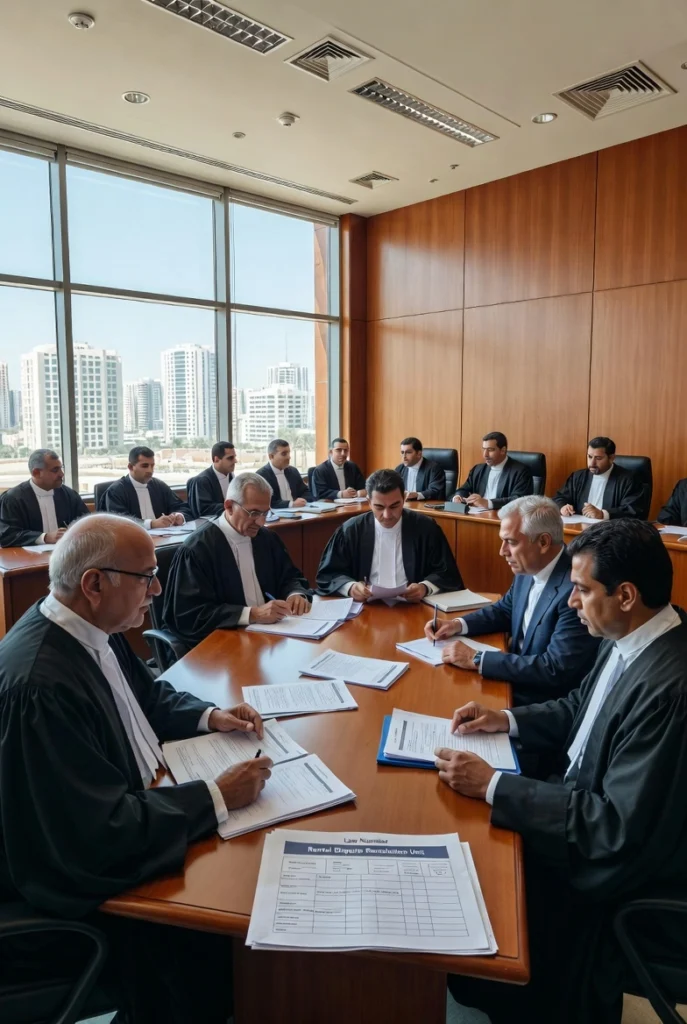
Why Corporate Structuring Matters in the UAE
A weak structure may not create problems immediately. In many businesses, the real issues appear later, when shareholders disagree, investors enter, succession begins, or an exit opportunity arises.
Poor structuring commonly results in:
- unclear voting and control arrangements,
- disputes over transfers and valuations,
- deadlock between founders or shareholders,
- fragmented inheritance outcomes,
- unnecessary risk exposure across business lines,
- and difficulty attracting investment or executing a sale.
A strong structure, by contrast, helps a business define how control is exercised, how ownership moves, how disputes are managed, and how assets are protected.
Shareholding Structure Is About More Than Ownership Percentage
Many businesses focus only on who owns what percentage of the company. In practice, effective shareholding design is more nuanced. The real questions often include:
- Who controls key decisions?
- What rights attach to each shareholding position?
- Can shares be transferred freely?
- What happens if a shareholder dies?
- How are minority interests protected?
- What happens if investors want to exit?
These issues are usually addressed through a combination of the company’s constitutional documents and shareholder arrangements. Where those documents are weak, outdated, or overly generic, even commercially successful businesses can become vulnerable at moments of transition.
Share Transfers in the UAE: Legal and Practical Considerations
A share transfer should never be treated as a simple commercial handover. In the UAE, the process is shaped by the company’s legal form, its constitutional documents, the relevant licensing authority, and any pre-emption or approval requirements.
Before any transfer moves forward, the company should usually review:
- the Memorandum of Association,
- the shareholders’ agreement,
- any right of first refusal or pre-emption clauses,
- valuation and payment mechanics,
- regulatory filing requirements,
- and board or shareholder approvals.
In practical terms, mainland and free zone procedures differ. Jafza, for example, publishes specific guidance for capital and registration amendments through Dubai Trade, while DMCC provides formal structuring routes for holding companies and SPVs under its own licensing framework.
For this reason, transfer planning should be handled as a legal and governance exercise, not just an execution step.
Drag-Along, Tag-Along, and Exit Control
For companies with multiple shareholders, especially investor-backed or founder-led businesses, transfer rights should be designed with eventual exits in mind.
Drag-along rights can help majority stakeholders deliver a clean sale by requiring minority holders to participate on the same terms.
Tag-along rights can protect minority shareholders by allowing them to join a sale and receive equivalent pricing and conditions.
These rights are highly useful in practice, but their effectiveness depends on careful drafting and their interaction with the company’s constitutional framework and any statutory transfer rules. In the UAE, the quality of drafting remains central to whether such clauses will be workable in a live transaction.
Capital Reduction Is Not Always a Distress Signal
Capital reduction is often misunderstood. It is not necessarily a sign of financial weakness. In many cases, it can be a legitimate corporate tool used to realign the capital structure, address accumulated losses, improve balance sheet efficiency, or prepare for restructuring or a sale.
The key legal principle is creditor protection. UAE corporate procedures require that capital changes do not unfairly prejudice creditors, and free zone authorities may impose their own formal process, notice, and approval requirements. Jafza, for example, provides specific procedural guidance for increase or decrease of share capital through its platform.
A well-planned capital reduction can be strategic. A poorly handled one can delay transactions, trigger objections, or create internal shareholder disputes.
Family Businesses Need Structuring That Survives Transition
Family businesses remain a cornerstone of the UAE economy, and succession is one of the most sensitive structuring issues they face.
The UAE has taken formal steps to support this sector through Federal Decree-Law No. 37 of 2022 on Family Businesses and through the Unified Family Business Registry, which the Ministry of Economy & Tourism has opened for registrations. Official guidance states that registration can help consolidate shares within a common register and reduce fragmentation through inheritance or ad hoc transfers.
For many family-owned groups, the legal question is not simply who inherits value. It is how control, continuity, and decision-making remain stable after the death of a founder or shareholder.
Good family business structuring typically considers:
- transfer restrictions outside the family,
- succession mechanisms,
- governance councils or family charters,
- valuation methods,
- buyout rights,
- and continuity planning across generations.
Holding Companies and Group Structuring in the UAE
Holding company structures are commonly used to centralize ownership, improve governance oversight, separate risk, and streamline control across multiple operating businesses.
Depending on the client’s objectives, a holding structure may support:
- group ownership of subsidiaries,
- asset segregation,
- centralized IP ownership,
- succession planning,
- investor participation,
- or pre-exit consolidation.
DMCC now expressly offers SPV and Holding Company setup options for asset management, investment holding, and group ownership, while the UAE’s broader company law framework continues to support more flexible structuring across jurisdictions.
The right choice between mainland, free zone, offshore, or financial free zone structures depends on the company’s actual business model, risk profile, and long-term objectives. There is no single “best” structure in the abstract
SPVs in the UAE: When They Make Strategic Sense
A Special Purpose Vehicle is not just a technical entity. It is a strategic tool.
SPVs are commonly used to:
- hold a specific asset,
- isolate risk,
- structure an investment,
- support project finance,
- ring-fence liabilities,
- or consolidate ownership before a transaction.
In the UAE, DMCC has formally introduced SPV and HoldCo options as business structuring solutions, and its licensing rules recognise SPV licensing pathways.
Used properly, SPVs can bring clarity and protection. Used carelessly, they can create extra complexity without solving the underlying governance problem.
Why Legal Drafting Determines Whether the Structure Actually Works
Many businesses assume the structure itself is the solution. In reality, the legal documents are what make the structure function.
Even the most commercially sensible arrangement can fail if the drafting is weak. This is especially true for:
- transfer clauses,
- pre-emption rights,
- drag/tag provisions,
- succession rules,
- deadlock clauses,
- reserved matters,
- valuation mechanisms,
- and constitutional amendments.
In practice, corporate structuring is only as strong as the documents that govern it.
How Omam Consultancy Helps
At Omam Consultancy, we advise founders, shareholders, boards, family businesses, and investors on structuring decisions that require more than generic setup support.
Our work includes:
- shareholding and governance structuring,
- shareholders’ agreements,
- transfer restriction design,
- family business continuity planning,
- holding company and SPV structuring,
- capital restructuring support,
- and board-level legal review of ownership changes.
The objective is not just to create a company. It is to create a legal structure that supports continuity, control, and commercial strategy.
Conclusion
In the UAE, corporate structuring and shareholding design have become central to how businesses manage growth, protect value, and prepare for transition. Whether the issue is a share transfer, a family succession event, an SPV setup, a capital restructuring, or a holding company design, the legal architecture matters.
A good structure reduces friction. A poor one stores up future disputes.
For businesses that want clarity over control, stability during succession, and stronger preparedness for investment or exit, structuring should be approached as a strategic legal exercise from the beginning.
To support your business with strong legal foundation, our services cover a wide range of structuring and compliance needs in the UAE. From expert Corporate Law Advisory to tailored Family Business Advisory, we help companies build clear governance, manage ownership transitions, and protect long-term value. Whether you require reliable Document Attestation or want to stay informed with the latest UAE Company Law Updates, our team ensures you remain compliant and well-positioned in a constantly evolving legal environment.
We also specialize in drafting and reviewing Shareholders’ Agreements that clearly define rights, responsibilities, and exit strategies for all stakeholders. By combining practical legal insight with commercial understanding, we help businesses reduce risks, avoid disputes, and create structures that support growth, investment, and succession planning in the UAE.
Need to review your company’s ownership or structuring model?
Omam Consultancy advises on UAE shareholding design, transfers, holding structures, SPVs, and family business governance.
Frequently Asked Questions: Corporate Structuring & Shareholding in the UAE
Can a UAE LLC issue different classes of shares?
The answer depends on the company’s legal form, jurisdiction, and constitutional documents. The UAE’s company law framework has become more flexible over time, but the exact availability and structuring of differentiated rights should be reviewed against the relevant law and regulator requirements before implementation.
What should be reviewed before transferring shares in a UAE company?
A company should review its Memorandum of Association, shareholders’ agreement, pre-emption rights, approval thresholds, valuation provisions, and the rules of the relevant authority or free zone before starting the transfer process.
Are drag-along and tag-along rights enforceable in the UAE?
They can be effective when carefully drafted and properly aligned with the company’s constitutional and contractual framework. Their enforceability depends heavily on wording, structure, and implementation.
Can creditors object to a capital reduction?
Yes. Creditor protection is a core part of capital reduction procedures, and authorities may require notices, supporting documents, and compliance with formal process requirements before the reduction is approved.
What is the benefit of registering a family business in the UAE?
The Ministry of Economy & Tourism states that registration grants legal recognition as a family business and can help consolidate shares in a common register, reducing fragmentation caused by inheritance or random sales.
Why would a business use a holding company or SPV?
Holding companies and SPVs can help centralize ownership, isolate risk, simplify governance, support investment structuring, and ring-fence specific assets or projects. DMCC officially offers both SPV and HoldCo solutions for these purposes.